Lithium carbonate is a significant chemical compound that is widely used in industrial, pharmaceutical, and the energy storage industry. With the rising demands for batteries made from lithium as well as advanced materials such as lithium carbonate, it is now an extremely valuable chemical in the world. It is used to treat mental health issues to power electric cars, the value of lithium carbonate is continuing to increase across many sectors.
In this comprehensive guide we at Amizara Speciality Chemicals, we will look at the nature of lithium carbonate, its uses, lithium carbonate benefits as well as the negative side effects and its main industrial applications to help you to understand why this substance plays a crucial role in the modern world of technology and healthcare.
What is Lithium Carbonate?
To comprehend its importance to understand its importance, we first need to be able to answer the question: what is lithium carbonate?.
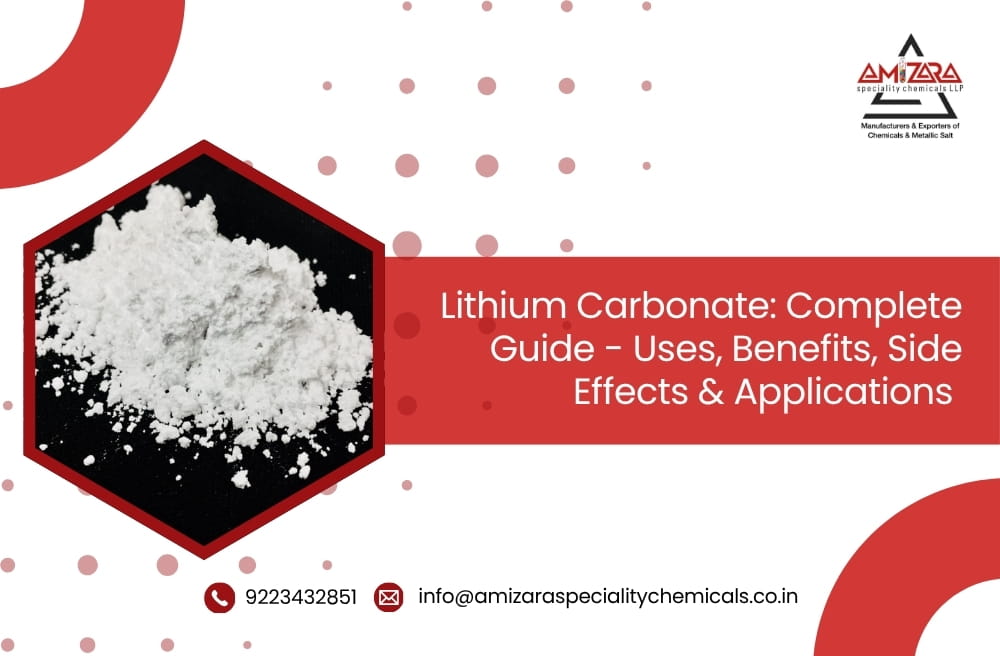
Lithium carbonate is the transparent, white, odorless powder that has an chemical formula of Li2CO3. This is an inorganic compound that comes from brine and lithium-containing minerals that are found in regions like South America, China, and Australia.
The substance is highly sought-after since lithium is the thinnest metal in the periodic table that has outstanding electrochemical properties. This makes lithium carbonate a crucial ingredient in the manufacturing of lithium-ion batteries, ceramics glass, lubricants, as well as pharmaceutical formulations.
Lithium carbonate is usually made by the extraction of brines that are rich in lithium or mining hard rock followed by chemical processing to make pure lithium carbonate, which is ideal for many industries.
Lithium Carbonate Uses in Different Industries
Lithium carbonate demand has grown substantially due to its broad variety of applications. Here are a few of the most crucial lithium carbonate applications across various industries.
1. Pharmaceutical Industry
The most popular lithium carbonate applications is for treatments for mental health disorders. It has been utilized for a long time as a treatment to manage bipolar disorder and mood disorders..
Lithium carbonate helps in stabilizing mood swings and decreasing depressive and mania-like episodes. It regulates neurotransmitters within the brain, which makes it a beneficial treatment for certain psychiatric disorders.
2. Lithium-Ion Battery Manufacturing
The most significant and fastest-growing application of lithium carbonate currently involves lithium-ion battery manufacturing.
Lithium carbonate is the important raw material to manufacture cathode materials for batteries that supply power for:
- Vehicles powered by electricity (EVs)
- Smartphones
- Laptops
- Energy storage systems
- Grids for renewable energy
In the same way that electric vehicles and the adoption of renewable energy rise across the globe, the need for lithium carbonate will continue to increase.
3. Glass and Ceramics Industry
Lithium carbonate is extensively used in the ceramics and glass industries as it increases the strength of products and decreases melting temperatures.
Some of the benefits of this sector are:
- Increased thermal resistance
- Durability is increased
- Improved glaze quality
- Energy consumption is reduced during production
That makes lithium carbonate an ideal additive in specialty ceramics ovenware, as well as industrial glass.
4. Aluminum Production
Another significant industrial use for lithium carbonate can be found in aluminum melting. It can improve efficiency and conductivity in the electrolysis process that is used for the production of aluminum.
By adding lithium carbonate manufacturers are able to:
- Lower energy consumption
- Enhance productivity
- Enhance metal quality
5. Lubricating Greases
Lithium carbonate can also be used in the manufacture of lubricating greases made of lithium..
They are extensively used in industrial machinery, automotive and heavy equipment due to the fact that they are able to provide:
- Stability of high temperatures
- Water resistance
- Excellent mechanical performance
This makes lithium-based oils ideal for industrial environments that are extremely demanding.
Lithium Carbonate Benefits
There are a variety of benefits of lithium carbonate that make this chemical indispensable in all industries.
1. Essential for Modern Battery Technology
One of the most significant lithium carbonate advantages is its contribution to the development of lithium-ion battery technology. The batteries provide:
- High energy density
- Long-lived cycles
- Lightweight design
This makes them perfect for electric cars and portable electronics.
2. Supports Renewable Energy Storage
Lithium carbonate plays a major role in the energy storage options that are vital for wind and solar power systems.
Large-scale lithium batteries can conserve the energy generated during peak energy generation, and release it as required, ensuring grid stability and sustainability.
3. Effective Mood Stabilizer
In the field of medicine the use of lithium carbonate has been proved to be highly effective in the treatment of bipolar disorders by reducing the intensity and frequency that manic attacks occur. It is still among the top commonly prescribed mood stabilizers worldwide.
4. Improves Manufacturing Efficiency
In the fields of aluminum and ceramics production In industries like aluminum production and ceramics, lithium carbonate can help lower temperatures for processing and boost efficiency which results in lower costs of production.
Side Effects of Lithium Carbonate
While lithium carbonate is a great source of benefits, including in the field of medicine, it could cause some side negative effects if used improperly.
Common effects from lithium carbonate can include:
- Nausea
- Tremors
- A rise in thirst
- Frequent urination
- Weight loss
- Mild cognitive effects
In rare cases, a high consumption of lithium can cause lithium poisoning and needs immediate medical treatment.
To this end, lithium carbonate medicine must be administered under medical supervision that includes regular monitoring of levels of lithium in blood.
Industrial Demand and Global Market Growth
The market for lithium is growing quickly, fueled predominantly through technological advancements such as the technological advancements in electric vehicles as well as technology to store energy.
Some of the factors driving a rise in demand for lithium carbonate include:
- The growth of manufacturing EVs
- Growing renewable energy adoption
- Expanding the range of consumer electronic
- Initiatives of the government to promote renewable energy
In the process, lithium carbonate is now an crucial material in the worldwide transition towards sustainable energy systems..
Why High-Purity Lithium Carbonate Matters
Industries such as pharmaceuticals batteries and advanced ceramics require pure lithium carbonate to ensure quality security, consistency, and safety.
Lithium carbonate of high-quality offers:
- Improved electrochemical performance
- Product reliability improved
- Increased efficiency in manufacturing processes
This makes the purchase of calcium carbonate in the form of lithium from reliable chemical producers crucial in industrial applications.
Lithium carbonate is now one of the top chemical compounds used in modern-day industry. From the treatment of mental health to powering electric cars and storage systems for renewable energy the range of applications of this chemical compound continues to grow.
Knowing the significance of lithium carbonate, its uses the benefits of lithium carbonate and possible negative side consequences will help you understand its significance for industrial and medical fields.
As demand for green energy sources increases the lithium carbonate material will continue to be an vital element driving the development of sustainable and innovative technologies across many industries.
Companies such as Amizara Speciality Chemicals are committed to supplying top-quality lithium carbonate that can meet the changing requirements of energy, pharmaceutical and other manufacturing sectors around the world.
FAQ
1. What are the uses of lithium carbonate?
Lithium carbonate can be found in the treatment of bipolar disorder, the manufacturing of lithium-ion batteries, glass and ceramics production as well as lubricating greases and aluminum processing.
2. How do you define lithium carbonate?
Lithium carbonate can be described as an inorganic chemical compound that has its formula of Li2CO3. Lithium carbonate is white crystal powder that is widely used in batteries, medicine as well as various industrial applications.
3. What are the most important advantages of lithium carbonate?
Benefits of Lithium Carbonate include mood stabilization during medical treatments, better battery performance, improved ceramic strength and efficiency in manufacturing processes in industries.
4. Are there any adverse consequences of using lithium carbonate?
Yes, lithium carbonate adverse effects can include nausea, thirst, tremors, weight growth and frequent urine leaks. It is recommended to take it under medical supervision to prevent toxic effects of lithium.
5. What makes lithium carbonate so important in electric automobiles?
Lithium carbonate is an essential raw material used in the production of cathode material in lithium-ion batteries that provide power to electric vehicles as well as battery storage for energy. The electrochemical properties of lithium carbonate allow for the highest energy density and longer battery life.



Recent Comments